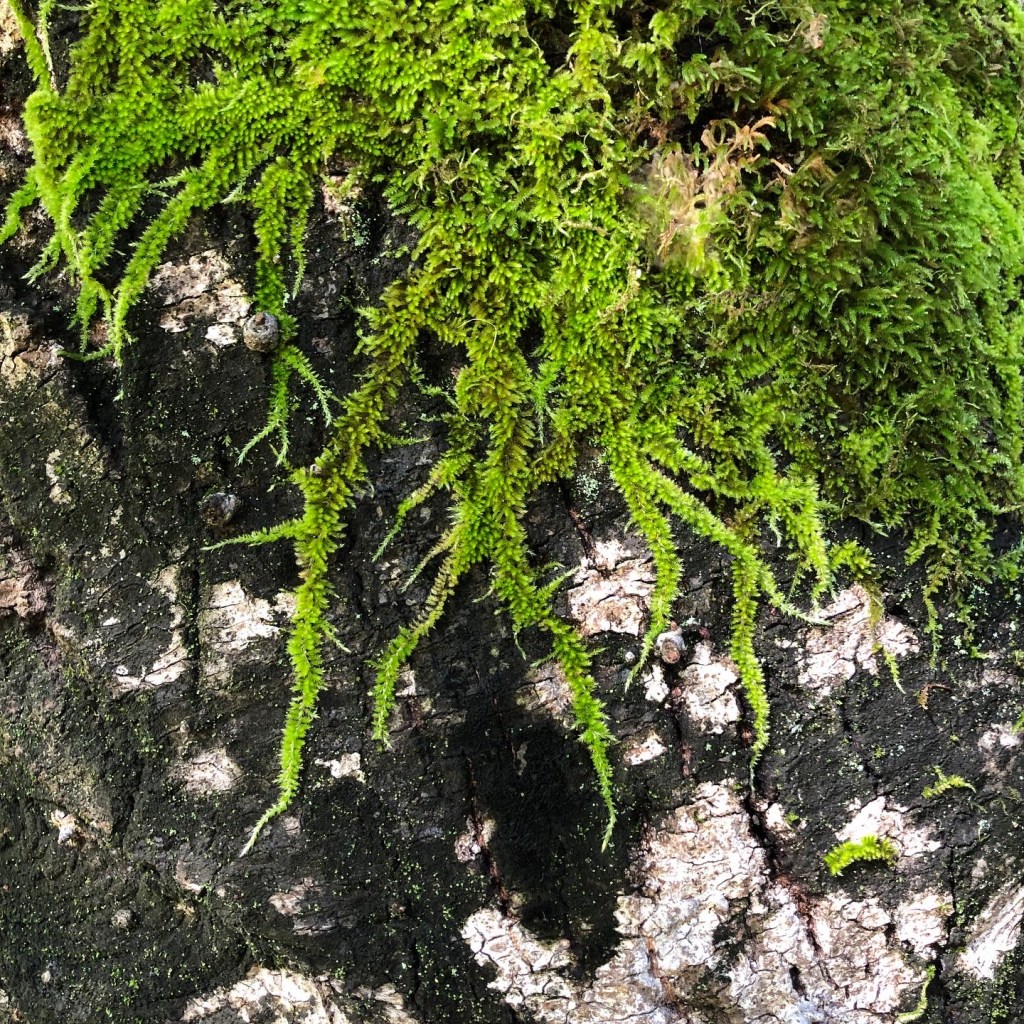
Ancient and intimate moss on oaks.

Insistence in second exclamation marks.


Float between beats of chickadee wings.

Vestigial letters with unsounded meanings.


Steel needle’s path before hiss of thread.

Awkward pause of a lost enjambment.


Willow wrapped in winter mist.

Intension in budding ellipses.


Owl flight sensed by starlight.

The grace in an ordinary thought.

The still blue heart of a candle flame

burning in an imaginary room.


Blank spaces between lines

where I haven’t got a single word to say.
Footnote
All the poems about silence are about the silence of the poem. I speak them. But I know, with a note of sadness, a reader will not. But all silence is illusion. It exists as a myth. There is always sound. Even the stars sing. It’s a question of listening. I hope, when I write a poem, it will sound in the reader’s mind with something like the pace and resonance of voice, a voice like mine when I read [ say red] it. As I wrote it. I send the poem out as a promise of connection in creation, suspended in the infinitive of literary present tense. A poem is always being, being silently read. Yet reading—whether silent or not—is a visual act; words are an image first. They must be in order to be read. A word’s image is shaped by its past, passed on. It’s a spell, and for the spell to work, the illusion of silence has to surrender to the illusion of sound. A poem is an ancient possession. But who is possessed? Is it the poet or is it the reader? Only you know.
 The Last Line